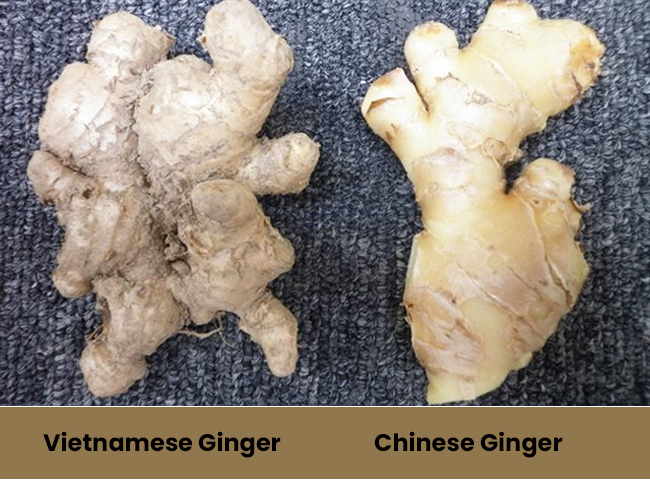
Vietnamese ginger and Chinese ginger have many obvious differences, helping consumers easily identify them. Color, size, shape, skin, aroma, core and price are pivotal factors. Vietnamese ginger often has a dark brown color, small and elongated roots, rough skin, and a strong characteristic aroma. Meanwhile, Chinese ginger is paler, much larger, with smooth, shiny skin and no distinctive smell or taste. Mastering these differences, you can easily choose quality Vietnamese ginger at the market without fear of “losing money
How to distinguish between Vietnamese ginger and Chinese ginger is a concern for many people when buying ginger. Instead of being confused, now you can apply the following tips to accurately identify the origin. Just pay close attention to color, size, shape, skin, aroma and some other factors, choosing real Vietnamese ginger will be easier than ever. Let’s get started practicing these simple but effective tricks to get fresh and delicious ingredients for your family meals.
Ginger is an indispensable spice in every Vietnamese kitchen. However, with imported ginger flooding the market, many people find it challenging to distinguish between fresh ginger from Vietnam versus China. Luckily, Vietnamese ginger has unique characteristics that set it apart from its Chinese counterpart. Arm yourself with the knowledge below to expertly identify authentic Vietnamese ginger (1).
Color
The first telltale sign is the color. Vietnamese ginger roots have a dark brown, almost black skin. Conversely, Chinese ginger appears light yellow or pale brown. The Vietnamese variety achieves its deeper color from higher levels of antioxidants. These antioxidants imbue the roots with a richer flavor and greater health benefits as well.
Size
On average, Chinese ginger is 3-5 times larger than Vietnamese ginger. A single Chinese ginger root can weigh around 3-5 grams. Comparatively, Vietnamese ginger weighs only 0.5-1 gram each. The Chinese variety achieves accelerated growth through intensive farming methods. However, the rapid growth comes at the expense of flavor. The smaller Vietnamese ginger delivers a greater concentration of aromatic oils.
Shape
In addition to size, the shape also varies between the two. Chinese ginger has a plump, bulbous center with relatively few narrow branches. The branches present are round and smooth rather than long and slender. Vietnamese ginger has a narrower core with abundant long, thin, knobby protrusions spreading out from the center.
Skin Texture
Chinese ginger skin appears shiny and smooth with few visible veins. Meanwhile, Vietnamese ginger skin looks rough and gritty with many fine, noticeable veins running across it. The Vietnamese skin may even have bits of dirt clinging to it, showing less handling and processing.
Aroma
Here is an easy way to test the ginger’s aroma. Simply scratch the skin with your fingernail and take a whiff. Vietnamese ginger releases a wonderfully strong, spicy scent when the skin is broken. Chinese ginger has little to no detectable smell.
Flesh
Inside, Vietnamese ginger flesh is fibrous with clearly defined circular veins. Chinese ginger has softer flesh and paler, less defined veins. More fibers and veins equate to more flavor.
Price
Finally, Vietnamese ginger costs slightly less per kilogram than imported Chinese ginger. Go for the less expensive option to get authentic Vietnamese ginger.
With this handy produce guide, identifying real Vietnamese ginger will be a breeze. Next time you shop at the market, apply these tips to avoid counterfeit ginger and bring home the highest quality spice for your Vietnamese dishes. The extra flavor and health benefits are worth the few extra moments of inspection.